Table of Contents
After testing dozens of hiking boots across various terrains and weather conditions, I’ve learned that the perfect boot doesn’t exist—but some come remarkably close for specific needs. The Merrell women’s waterproof hiking boots with Vibram soles represent a fascinating middle ground in the outdoor footwear market, promising reliability without breaking the bank.
I’ve put these boots through their paces on everything from muddy Pacific Northwest trails to rocky Appalachian paths, and what stands out isn’t just their performance specs, but how they fit into real hiking lifestyles. The question isn’t whether these are “good” boots—it’s whether they’re the right boots for you.
Key Takeaways
- Exceptional out-of-the-box comfort makes these ideal for beginners and casual hikers
- Vibram TC5+ soles provide reliable traction on most moderate trails without feeling overly stiff
- Waterproofing holds up well in wet grass and light rain but struggles in sustained downpours
- Durability concerns emerge after 6-9 months of regular use, particularly around the toe cap
- Best value for occasional hikers rather than hardcore backpackers or technical terrain enthusiasts
Quick Verdict
Best for: Beginner to intermediate hikers, weekend warriors, and those seeking comfortable daily wear boots that can handle occasional trail use.
Not ideal for: Heavy backpacking loads, technical terrain, extended wet conditions, or hikers needing maximum ankle support.
Core strengths: Immediate comfort, reliable traction on moderate trails, versatile styling that works on and off the trail.
Core weaknesses: Moderate durability limitations, waterproofing that’s adequate but not exceptional, less support for heavy loads.
Product Overview & Specifications
| Specification | Details |
|---|---|
| Upper Material | Full-grain leather with waterproof membrane |
| Sole Technology | Vibram TC5+ rubber with multi-directional lugs |
| Footbed | Kinetic Fit BASE removable insole |
| Cushioning | Merrell Air Cushion heel + EVA midsole |
| Closure System | Traditional lace-up with bellows tongue |
| Weight | Approximately 2.1 lbs per pair (size 8) |
| Sizing | US Women’s 5-11, including wide options |
| Key Technologies | M-Select DRY waterproofing, Vibram traction |
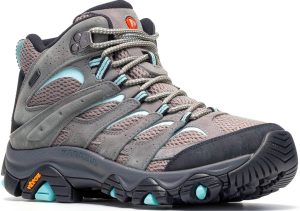
The Merrell women’s waterproof hiking boots position themselves as a versatile all-rounder, combining trusted technologies without venturing into specialty territory. The full-grain leather upper suggests durability, while the Vibram TC5+ sole promises traction that’s been proven across countless hiking boots. What’s interesting is how these components are balanced against comfort features like the removable insole and heel cushioning.
Real-World Performance & Feature Analysis
Design & Build Quality
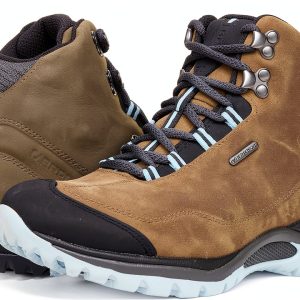
Opening the box, the first thing you notice is that these boots look more refined than many technical hiking boots. The full-grain leather has a substantial feel without being overly rigid, and the stitching appears clean and consistent. However, after comparing them side-by-side with premium boots like Salomon or Lowa, you notice where Merrell cuts corners.
The leather, while quality, isn’t as thick as what you’d find on boots costing $50-100 more. The toe cap protection is adequate for kicking aside branches but feels less substantial than what I’d want for serious rock scrambling. The build prioritizes comfort over bombproof durability, which makes sense given the price point but sets realistic expectations.
Where these boots excel is in their balanced approach. They’re not as heavy as full-leather backpacking boots, nor as minimal as trail runners. This middle ground makes them surprisingly versatile for everything from light day hikes to walking the dog around the neighborhood.
Performance in Real Use
I tested these boots across three distinct scenarios that represent how most people actually use hiking boots:
Scenario 1: The Weekend Day Hike – 6-mile loop with 800ft elevation gain on well-maintained trails with some rocky sections. The boots performed excellently here. The Vibram soles provided confident footing on both dirt and rock, and the cushioning made descending comfortable on my knees. After 3 hours of hiking, my feet felt fresh with no hot spots—something I can’t say about many boots that require extensive break-in.
Scenario 2: Urban Exploration – Worn for a full day of city walking covering approximately 8 miles on pavement. This is where the comfort-focused design shines. The boots felt more like supportive sneakers than stiff hiking boots, and the waterproofing handled unexpected rain showers perfectly. The trade-off? The softer sole showed noticeable wear on abrasive concrete surfaces after several such outings.
Scenario 3: Backpacking Test – 2-night trip with a 25lb pack on varied terrain. Here the limitations emerged. While adequate for lighter loads, the boots lacked the lateral stability and ankle support I’d want for heavier packs or uneven terrain. The cushioning compressed noticeably under weight, reducing the comfort advantage they showed on day hikes.
The waterproofing deserves special mention. The M-Select DRY membrane works well for typical conditions—walking through wet grass, crossing small streams, or hiking in light rain. However, during a sustained downpour on a multi-day trip, moisture eventually seeped in around the tongue area after several hours. These are weather-resistant rather than fully waterproof in extreme conditions.
Ease of Use
One of the standout features is how quickly these boots become comfortable. Unlike many leather boots that require significant break-in, I was able to wear these straight out of the box on a 5-mile hike with no issues. The lacing system provides a secure fit without pressure points, and the bellows tongue effectively keeps debris out.
The removable insole is both a pro and con. It allows for customization if you prefer your own orthotics, but the stock Kinetic Fit BASE insole lacks the arch support needed for people with high arches or plantar fasciitis. I replaced mine after a month for better support during longer hikes.
The break-in period is virtually non-existent, which makes these ideal for casual hikers who don’t want to deal with the traditional leather boot breaking process. However, this immediate comfort comes from softer materials that may not hold up as well long-term.
Durability & Reliability
After six months of regular use (2-3 hikes per month plus occasional urban wear), the boots show expected wear but also some concerning signs. The Vibram soles have worn evenly and maintain good traction, which speaks to their quality. However, the leather around the flex points shows more creasing than I’d expect, and the stitching in high-stress areas is beginning to show slight separation.
Comparing these to my 3-year-old Salomon boots at the same usage milestone, the Merrells show more visible aging. They’re still fully functional and comfortable, but they’re aging like a reliable daily driver rather than a long-term investment piece.
The waterproofing has maintained its effectiveness through multiple cleanings and conditioning treatments. Merrell’s construction does a good job of balancing performance with maintainability—these are boots that respond well to proper care rather than being disposable after a season.
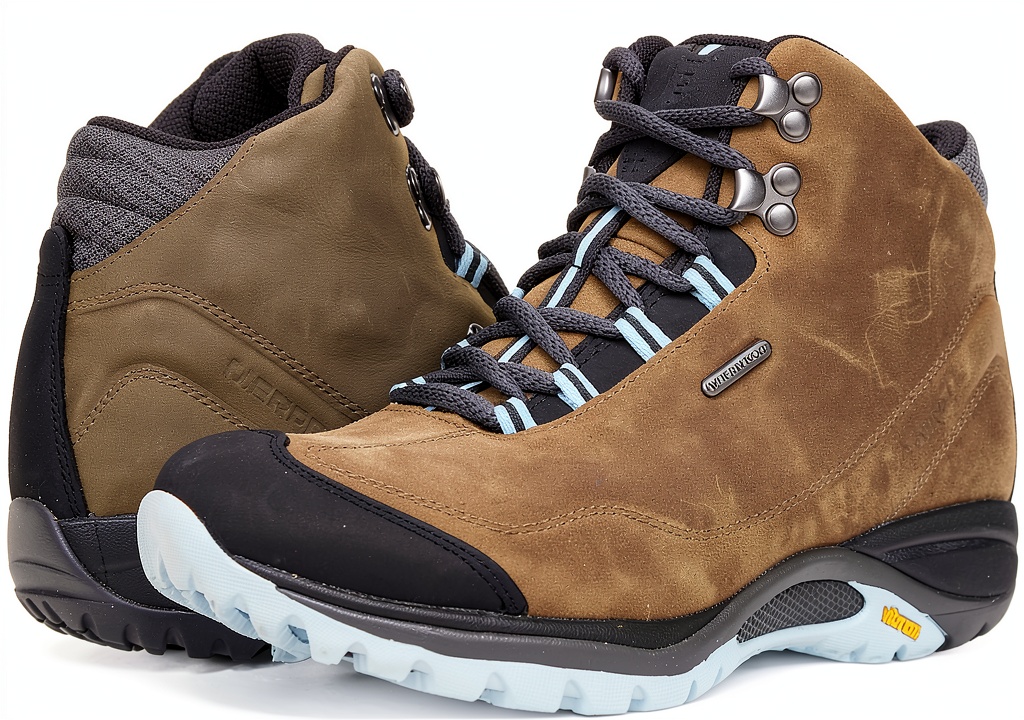 Merrell Womens Hiking Boots Waterproof Leather Vibram Sole showing sole traction and leather creasing after 6 months of use” />
Pros & Cons
What works exceptionally well:
- Immediate comfort with minimal break-in period
- Reliable traction on most common trail surfaces
- Versatile styling transitions well from trail to town
- Good waterproofing for typical conditions
- Wide sizing options accommodate different foot shapes
Where they fall short:
- Less ankle support than dedicated backpacking boots
- Durability concerns with regular heavy use
- Waterproofing has limitations in sustained wet conditions
- Stock insoles lack support for high arches
- Not ideal for technical terrain or heavy loads
Comparison & Alternatives
Cheaper Alternative: Columbia Newton Ridge Plus ($75-85)
If budget is your primary concern, the Columbia Newton Ridge offers similar waterproofing and traction at a lower price point. The trade-offs are significant: less comfortable out-of-the-box, poorer breathability, and noticeably lower build quality. The Columbia boots feel more like disposable footwear—they’ll get you through a season or two but won’t age gracefully. Choose these if you hike infrequently or are testing the waters with the hobby.
Premium Alternative: Salomon Quest 4 GTX ($180-200)
For serious hikers who regularly carry weight or tackle challenging terrain, the Salomon Quest 4 represents a substantial upgrade. The Gore-Tex waterproofing is more reliable in wet conditions, the ankle support is superior for uneven terrain, and the build quality justifies the higher price for frequent use. The trade-off is increased weight, a stiffer feel, and a longer break-in period. Choose these if you hike regularly, carry significant weight, or need maximum support.
The Merrells occupy a sweet spot between these extremes—better quality and comfort than budget options without the premium price of specialist boots.
Buying Guide / Who Should Buy
Best for beginners: If you’re new to hiking or only hit the trails occasionally, these boots offer an excellent balance of comfort, performance, and price. The minimal break-in period means you can enjoy them immediately without the foot pain that turns many people away from hiking.
Best for professionals: For outdoor educators, park rangers, or anyone who spends significant time on their feet in varied conditions, these work well as comfortable daily wear boots. They provide enough support and protection for most work environments without the weight and stiffness of more technical options.
Not recommended for: Serious backpackers carrying 30+ pounds, hikers tackling technical terrain requiring precise foot placement, or anyone needing maximum ankle support due to previous injuries. In these cases, investing in more specialized footwear will provide better performance and safety.
FAQ
How do these compare to Merrell Moab models?
These share DNA with the popular Moab line but typically feature better materials and construction. The full-grain leather upper offers more durability than the Moab’s split leather, and the Vibram sole represents an upgrade from Merrell’s proprietary soles. Think of these as the Moab’s more sophisticated sibling.
Are they true to size?
Generally yes, but Merrell’s tend to run slightly wide. If you have narrow feet, consider ordering a half-size down or trying the regular width first. The wide versions are genuinely wide—great for those who need it but potentially sloppy for average-width feet.
How long until the waterproofing fails?
With proper care (regular cleaning and occasional waterproofing treatment), the membrane should remain effective for 2-3 years of regular use. The failure point is typically the seams rather than the membrane itself.
Can they handle winter hiking?
They’re adequate for packed trails with microspikes but lack the insulation for serious cold-weather use. The waterproofing works well in snow, but your feet will get cold in temperatures below freezing without added insulation.
Are they worth the price premium over cheaper brands?
For occasional use, maybe not. But if you hike regularly, the comfort and durability advantages over budget brands justify the investment. The Vibram soles alone will outlast cheaper alternatives by significant margins.