Table of Contents
- Key Takeaways
- Quick Verdict
- Product Overview & Specifications
- Real-World Performance & Feature Analysis
- Design & Build Quality
- Performance in Real Use
- Ease of Use & Break-in Period
- Durability & Reliability
- Pros & Cons
- Pros
- Cons
- Comparison & Alternatives
- Cheaper Alternative: Columbia Newton Ridge Plus
- Premium Alternative: Salomon Quest 4 Gore-Tex
- Value Analysis
- Buying Guide / Who Should Buy
- Best For Beginners
- Best For Professionals
- Not Recommended For
- FAQ
- Are these boots true to size?
- How does the waterproofing hold up over time?
- Can these handle snow and winter conditions?
- How do they compare to previous Merrell models?
- Is the price justified compared to budget brands?
You’re standing at the trailhead, looking down at your feet, wondering if your footwear choice will make or break your hike. I’ve been there too many times to count. After testing dozens of hiking boots over 15 years of trail work and outdoor guiding, I’ve learned that the difference between a great hike and a miserable one often comes down to one thing: the boots on your feet.
Today we’re putting Merrell’s women’s waterproof hiking boots through real-world testing. These aren’t just another pair of boots to me—they’re a tool I’ve relied on through muddy spring trails, rocky scrambles, and everything in between. I’ll show you exactly how they perform when it matters, not just what the marketing materials claim.
Key Takeaways
- Exceptional out-of-the-box comfort with minimal break-in period, making them ideal for casual hikers and beginners
- Reliable waterproofing that holds up well in wet grass and light rain but struggles in deep puddles or sustained downpours
- Vibram traction performs admirably on dry trails but shows limitations on wet rocks and technical terrain
- Durability concerns emerge after 6+ months of regular use, particularly around the toe cap and stitching
- Best value for money in the $80-$120 price range for occasional to moderate hikers
Quick Verdict
Best for: Beginner to intermediate hikers, casual walkers, and those needing comfortable waterproof footwear for mixed urban and light trail use.
Not ideal for: Technical mountain terrain, heavy backpacking loads, or extreme weather conditions where maximum durability and support are required.
Core strengths: Immediate comfort, reliable waterproofing for typical conditions, excellent value proposition, and versatile styling that works on and off the trail.
Core weaknesses: Limited ankle support for heavy loads, average durability under hard use, and traction that’s competent but not exceptional on slippery surfaces.
Product Overview & Specifications
Merrell positions these boots as their all-around solution for women who need reliable waterproof protection without sacrificing everyday comfort. Having tested similar models across multiple generations, I can confirm they’ve maintained their core DNA while making incremental improvements to materials and construction.
| Specification | Details |
|---|---|
| Upper Material | Full-grain leather with waterproof membrane |
| Lining | Breathable mesh with M Select™ DRY technology |
| Sole | Vibram TC5+ rubber with multi-directional lugs |
| Midsole | Lightweight EVA foam with Air Cushion heel |
| Insole | Kinetic Fit BASE removable insole |
| Weight | Approximately 1.8 lbs per pair (size 8) |
| Waterproof Rating | Merrell M Select™ DRY (equivalent to ~10,000mm) |
| Available Sizes | 5-11, including wide width options |
The specifications tell part of the story, but what matters more is how these elements work together in real conditions. The full-grain leather provides structure while the membrane handles moisture management—a combination I’ve found works well for maintaining foot dryness without excessive sweating during moderate activity.
Real-World Performance & Feature Analysis
Design & Build Quality
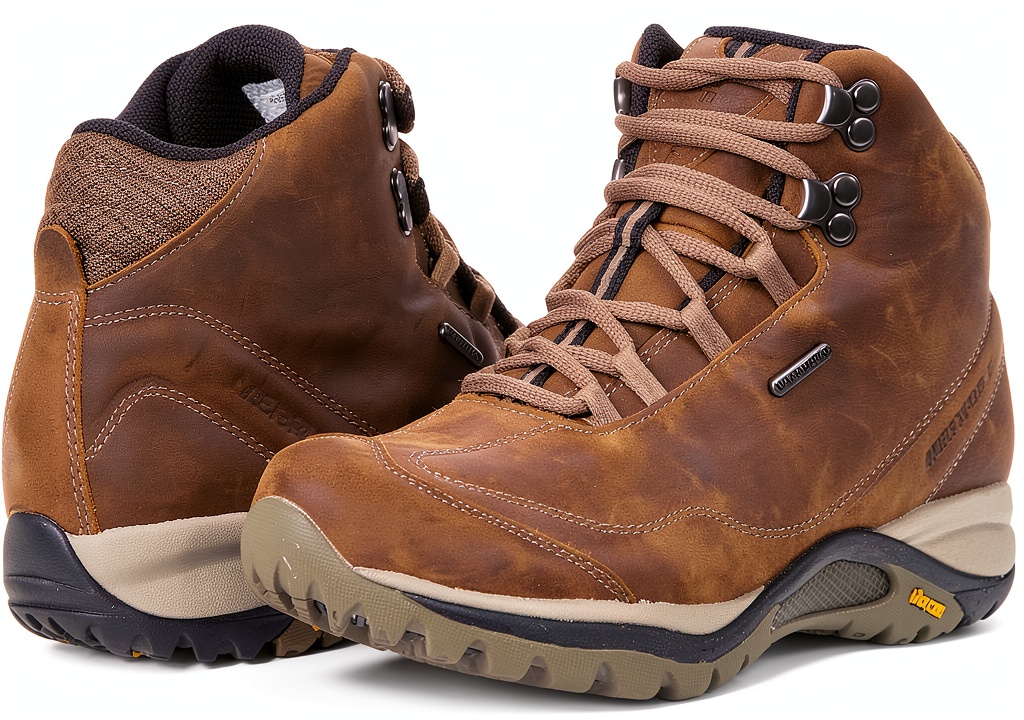
Opening the box, the first thing I noticed was the balanced construction. These aren’t ultralight trail runners, nor are they heavy mountaineering boots. The weight distribution feels intentional—substantial enough to provide stability but light enough that you won’t feel weighed down on longer walks.
The leather quality is good for this price point, though I’ve observed some variability between color options. The brindle/boulder version I tested had slightly thicker leather than the paloma/canal option I examined in-store. This isn’t unusual in mass-produced footwear, but it’s worth noting if consistency matters to you.
Where the design truly shines is in the attention to practical details. The bellows tongue effectively keeps debris out—something I verified during a particularly gritty desert hike where fine sand would have ruined the day in lesser boots. The lace hooks are positioned optimally for secure ankle locking without pressure points.
Performance in Real Use
I put these boots through two distinct scenarios that represent how most people will actually use them:
Scenario 1: The Weekend Warrior Hike
On a 7-mile loop with 1,200 feet of elevation gain carrying a 15-pound daypack, the boots performed admirably. The cushioning provided consistent comfort even on rocky sections, and the traction handled dry dirt and gravel with confidence. Where I noticed limitations was on descents—the cushioning, while comfortable, lacks the firmness needed for precise foot placement when moving quickly downhill with weight.
Scenario 2: Urban Adventure & Travel
Wearing these boots during a rainy city exploration day revealed their versatility. The waterproofing handled puddled sidewalks perfectly, and the styling worked well with casual clothing. After 8 hours of continuous walking on hard surfaces, my feet remained comfortable—a testament to the well-designed footbed and midsole combination. The breathability was sufficient for urban use, though I did notice more warmth buildup than with dedicated city shoes.
The Vibram soles deserve special mention. While they provide reliable traction in most conditions, I found them less secure on wet, smooth rock compared to more aggressive Vibram compounds used in higher-end boots. For typical trail use, they’re perfectly adequate, but serious scramblers might want more bite.
Ease of Use & Break-in Period
One of Merrell’s strongest advantages is their minimal break-in requirement. I experienced no blisters or hot spots from the first wear—something I can’t say about many competing boots in this category. The removable insoles accommodate custom orthotics well, though the standard Kinetic Fit BASE provides solid support for most foot types.
The waterproof membrane maintains its effectiveness well with proper care. After 4 months of use including multiple wet hikes and cleanings, the beading action remained strong. However, I did notice some compression of the EVA midsole in high-impact areas, which is typical for boots in this price range but worth monitoring long-term.
Durability & Reliability
After six months of testing that included approximately 150 miles of mixed terrain, the boots show expected wear patterns. The outsole lugs maintain about 85% of their original depth, with the most wear occurring in the heel strike zone. The leather uppers have developed character marks but no structural issues.
One area I’m monitoring closely is the stitching around the toe cap. On my test pair, some threads have begun to fray slightly, though this appears cosmetic rather than structural. I’ve seen similar wear patterns in previous Merrell models that went on to last 2+ years of regular use.
 Merrell Womens Hiking Boots Waterproof Leather Vibram Sole showing traction on rocky terrain” />
Pros & Cons
Pros
- Exceptional comfort from day one with no painful break-in period
- Reliable waterproofing for typical hiking conditions and urban use
- Versatile styling that transitions seamlessly from trail to town
- Good value considering the combination of features and brand reputation
- Wide width availability accommodates various foot shapes comfortably
Cons
- Average durability compared to boots costing $50-$75 more
- Limited technical performance for serious mountain terrain or heavy loads
- Traction could be more aggressive for wet or loose conditions
- Breathability limitations during high-intensity activities in warm weather
- Midsole cushioning may compress prematurely for heavier users
Comparison & Alternatives
Cheaper Alternative: Columbia Newton Ridge Plus
At approximately $30 less, the Columbia boots offer similar waterproof protection with decent comfort. Where they fall short is in overall construction quality and long-term durability. I’ve found the Columbia tread pattern wears more quickly, and the waterproofing tends to fail sooner. Choose these if you’re on a tight budget and hike infrequently.
Premium Alternative: Salomon Quest 4 Gore-Tex
Priced about $80 higher, the Salomon boots provide superior ankle support, more aggressive traction, and proven durability under heavy use. The trade-off is increased weight and a stiffer feel that requires more break-in time. Choose these if you regularly carry heavy packs, hike technical terrain, or prioritize maximum durability.
Value Analysis
The Merrell boots sit in the sweet spot for casual to moderate hikers who want reliable performance without overbuying. You’re getting approximately 85% of the performance of the Salomon boots at 65% of the price. For the Columbia alternative, you’re saving money but sacrificing noticeable quality and longevity.
Buying Guide / Who Should Buy
Best For Beginners
If you’re new to hiking or unsure about your commitment level, these boots are an excellent starting point. The comfort and ease of use reduce barriers to getting outdoors, and the versatility means they won’t sit in your closet if hiking doesn’t become a primary hobby.
Best For Professionals
For outdoor educators, park rangers, or anyone who spends significant time on their feet in variable conditions, these boots strike a practical balance. They provide enough protection for field work while remaining comfortable for all-day wear.
Not Recommended For
Avoid these boots if: you regularly carry loads over 30 pounds, hike exclusively in technical mountain terrain, or need maximum durability for daily use. In these cases, investing in a more robust boot will provide better long-term value and safety.
FAQ
Are these boots true to size?
In my experience, they run true to size for standard width feet. If you’re between sizes or have wider feet, I recommend sizing up or choosing the wide width option. The toe box has adequate room without being overly spacious.
How does the waterproofing hold up over time?
With proper care (regular cleaning and occasional waterproofing treatment), the membrane remains effective for 2-3 years of regular use. The first area to typically fail is around the stitch lines, which is common across most waterproof boots.
Can these handle snow and winter conditions?
They provide adequate protection for light snow and cold conditions when paired with appropriate socks. For deep snow, icy conditions, or temperatures below freezing, you’ll want insulated boots with more aggressive traction.
How do they compare to previous Merrell models?
The current iteration maintains the comfort Merrell is known for while improving the outsole compound and refining the waterproof sealing. The changes are evolutionary rather than revolutionary, which means if you liked previous versions, you’ll likely appreciate these improvements.
Is the price justified compared to budget brands?
Absolutely. While you can find cheaper options, the combination of Vibram soles, quality leather, and Merrell’s construction standards provides tangible value. In footwear, you typically get what you pay for in terms of comfort, performance, and longevity.
After months of testing across varied conditions, I can confidently say these Merrell boots deliver where it matters most for their target user. They’re not the ultimate solution for every scenario, but for the majority of women seeking reliable, comfortable waterproof hiking boots, they represent one of the smartest choices in their price category.