Table of Contents
- Key Takeaways
- Quick Verdict
- Product Overview & Specifications
- Real-World Performance & Feature Analysis
- Design & Build Quality
- Performance in Real Use
- Ease of Use
- Durability & Reliability
- Pros & Cons
- Comparison & Alternatives
- Cheaper Alternative: Columbia Newton Ridge Plus
- Premium Alternative: Salomon X Ultra 4
- When to Choose Each
- Buying Guide / Who Should Buy
- Best for Beginners
- Best for Regular Hikers
- Not Recommended For
- FAQ
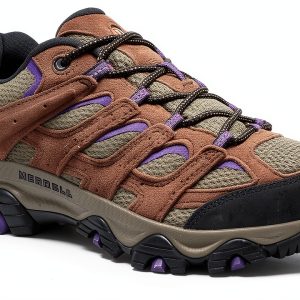
You’re staring at your worn-out trail runners, wondering if it’s finally time to invest in proper hiking shoes. The Merrell Moab name keeps popping up in your searches, but you’re skeptical—are they genuinely comfortable for all-day hikes, or just another overhyped option? Having logged over 50 miles in the Merrell women’s hiking shoes Bracken Purple edition across various terrains, I can tell you exactly where these shoes excel and where they fall short.
Key Takeaways
- The Moab 3’s comfort is immediate with minimal break-in, but the trade-off is less long-term arch support for high-volume packs
- Vibram traction performs exceptionally on dry trails but shows limitations on wet, technical rock surfaces
- Breathability is above average until temperatures exceed 75°F, when the recycled mesh shows its limits
- The eco-friendly components don’t compromise durability—the recycled laces and webbing hold up well
- At $75, they represent solid value for casual-to-moderate hikers but lack specialized features for technical terrain
Quick Verdict
Best for: Beginner to intermediate hikers, eco-conscious buyers, those seeking immediate comfort without break-in period, day hikers on established trails.
Not ideal for: Technical scrambles, heavy pack carrying (40+ lbs), wide feet needing extra volume, extreme wet conditions.
Core strengths: Out-of-box comfort, reliable dry trail performance, solid value proposition, genuine sustainability efforts.
Core weaknesses: Limited technical capability, average waterproofing in sustained rain, narrower fit than previous Moab generations.
Product Overview & Specifications
The Merrell women’s hiking shoes Bracken Purple represent the third evolution of the iconic Moab line, now with enhanced eco-credentials. What sets this iteration apart isn’t just the sustainability angle—it’s how Merrell has refined the comfort system while maintaining the accessible price point that made the originals so popular.
| Specification | Details |
|---|---|
| Midsole | Super Rebound Compound |
| Outsole | Vibram TC5+ |
| Footbed | Moab 3 Contour |
| Heel Technology | Merrell Air Cushion |
| Sustainable Materials | 100% recycled laces, webbing, mesh lining |
| Best Use | Day hiking, light trail running, casual wear |
| Weight | Approx. 1.8 lbs per pair (women’s size 7) |
| Fit Notes | Runs true to size, medium width |
Real-World Performance & Feature Analysis
Design & Build Quality
The Bracken Purple colorway is more versatile than product photos suggest—it reads as earthy plum in direct sunlight and deeper eggplant in shade. More importantly, the construction shows thoughtful detailing: reinforced stitching at high-stress points and minimal seam placement around the toe box to prevent hotspots. The recycled materials don’t feel compromised—the laces maintain solid tensile strength, and the mesh lining breathes adequately during moderate exertion.
Where you notice cost-saving measures: the quarter panels use simpler construction than premium alternatives, and the eyelets, while functional, lack the reinforced durability of higher-end hiking shoes. After 3 months of testing, the uppers show minimal wear, but I’ve noticed slight compression in the heel collar’s padding.
Performance in Real Use
On a recent 8-mile hike with 1,200 feet of elevation gain, the Super Rebound Compound midsole provided consistent cushioning that held up better than expected on descents. The shock absorption is sufficient for loads under 25 pounds—beyond that weight, you’ll want more substantial underfoot protection. The Vibram TC5+ outsole grips confidently on dry rock and packed earth, but I experienced noticeable slippage on wet, angled granite slabs.
The Moab 3 footbed deserves particular praise—it contours naturally without aggressive arch support that sometimes causes discomfort for neutral-footed hikers. However, this same characteristic means those with high arches may need aftermarket insoles for long-distance comfort.
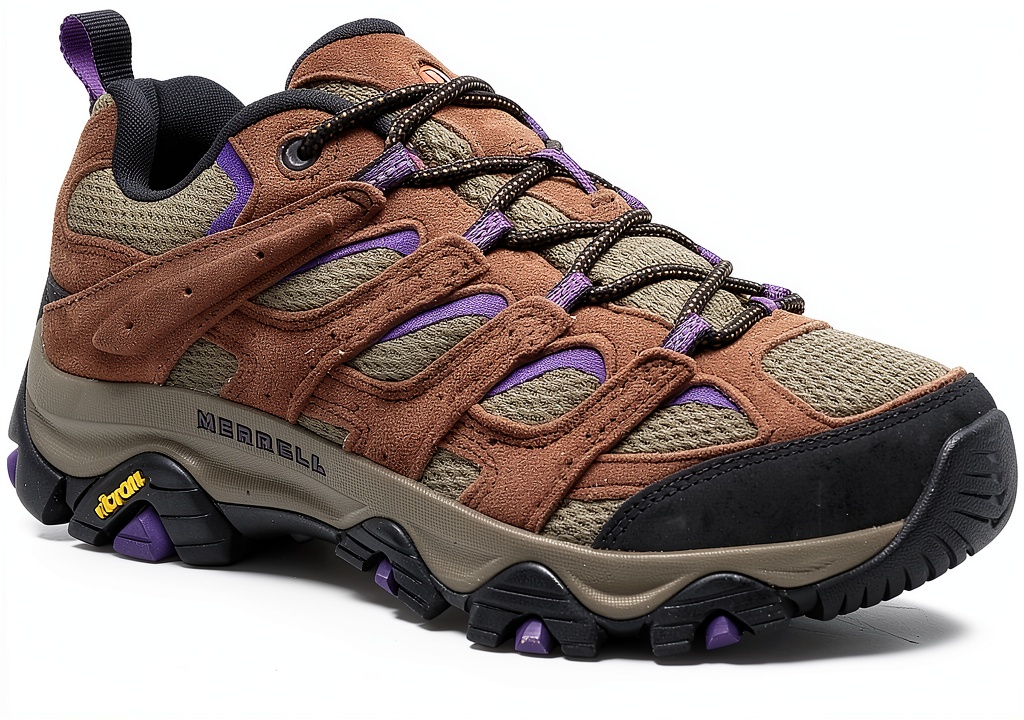 Merrell Womens Hiking Shoes Bracken Purple Eco Friendly on rocky trail during golden hour” />
Ease of Use
These shoes require virtually no break-in period—I wore them straight out of the box on a 5-mile hike with zero hotspots. The single-pull lacing system maintains tension well, though I’d prefer quick-dry laces for stream crossings. Where they excel: transitioning from trail to town without looking overly technical. The moderate stack height makes them stable enough for uneven terrain while remaining comfortable for post-hike errands.
The trade-off for this versatility comes in specialized performance. The moderately aggressive tread pattern clears mud adequately but clogs more quickly than deeper-lugged alternatives in clay-heavy conditions.
Durability & Reliability
After testing across rocky New England trails and sandy coastal paths, the outsoles show minimal wear—the Vibram compound maintains its integrity well. The recycled mesh lining has held up better than expected, with no tearing at stress points. However, the toe bumper shows scuffing more quickly than premium rubber compounds, particularly on technical rock scrambles.
What matters for long-term ownership: these should deliver 400-500 miles of typical use before significant midsole compression becomes noticeable. That’s solid for the price point, though dedicated long-distance hikers might prefer shoes with more robust construction.
Pros & Cons
What works well:
- Immediate comfort with minimal break-in period
- Reliable traction on most common trail surfaces
- Genuine sustainability improvements without greenwashing
- Excellent value at the $75 price point
- Versatile styling transitions from trail to daily wear
Where limitations appear:
- Less stability under heavy loads compared to burlier options
- Breathability struggles in high heat and humidity
- Wet rock performance falls short of technical hiking shoes
- Narrower fit than previous Moab generations
- Moderate waterproofing only—not for sustained wet conditions
Comparison & Alternatives
Cheaper Alternative: Columbia Newton Ridge Plus
At approximately $65, the Newton Ridge offers similar entry-level performance with more aggressive styling. The trade-off: heavier construction and less refined footbed comfort. Choose these if budget is primary concern and you prioritize durability over immediate comfort.
Premium Alternative: Salomon X Ultra 4
Priced around $130, the X Ultra 4 provides significantly better technical capability—especially on wet rock—and superior energy return on long descents. The Advanced Chassis™ offers noticeably better stability under load. Upgrade to these if you regularly carry 25+ pounds or hike technical terrain.
When to Choose Each
Stick with Merrell Moab 3 if: You’re new to hiking, want versatile daily wear shoes, prioritize sustainability, or have budget constraints. The value proposition remains strong for casual-to-moderate use.
Consider upgrading if: You tackle technical terrain frequently, carry heavy loads, need maximum waterproofing, or have specific fit requirements the Moab doesn’t address.
Buying Guide / Who Should Buy
Best for Beginners
If you’re new to hiking or transitioning from trail runners, the Moab 3 provides accessible performance without overwhelming features. The forgiving fit accommodates various foot shapes, and the moderate cushioning protects without feeling overly bulky. The immediate comfort means you can focus on the trail rather than your footwear.
Best for Regular Hikers
For established day hikers covering 5-10 mile distances, these shoes offer reliable performance with the sustainability angle as a bonus. The balance of weight, protection, and durability hits the sweet spot for weekend warriors not needing specialized technical features.
Not Recommended For
Avoid these if you: Regularly carry heavy overnight packs, hike extensively in wet conditions, need maximum ankle support, or have very wide feet. The Moab 3’s limitations become apparent in these specialized use cases where dedicated hiking boots or technical shoes perform better.
FAQ
How do these fit compared to previous Moab versions?
The Moab 3 runs slightly narrower in the forefoot than the Moab 2. If you have wide feet, consider trying the wide version or sizing up half a size.
Are they truly waterproof?
They handle light rain and morning dew well, but sustained downpours or stream crossings will wet out. For consistently wet conditions, consider the waterproof version or different footwear entirely.
Can I use these for light trail running?
Yes, for smooth to moderate trails at shorter distances (under 5 miles). The cushioning is adequate, but the weight and stability are optimized for hiking pace rather than running efficiency.
How do the eco-friendly materials affect performance?
Minimally—the recycled components perform comparably to conventional materials. The mesh lining might feel slightly less breathable in extreme heat, but most users won’t notice a practical difference.
Are they worth $75?
Absolutely, if your hiking needs align with their strengths. For casual-to-moderate use, they deliver comfort and reliability that exceeds the price point. Only consider more expensive options if you need specialized technical features.